Massachusetts Has a Record-Tying Nine Questions on the Ballot This Year. Here’s What to Know

Boston University leaders have urged the community to vote in this year’s midterm elections on November 3, when Massachusetts voters will decide nine ballot questions. Photo via iStock/Rawpixel
Massachusetts Has a Record-Tying Nine Questions on the Ballot This Year. Here’s What to Know
With Election Day Tuesday, Boston University leaders stress the importance of voting
Massachusetts voters must decide an unusually lengthy list of ballot questions in the November 3 midterm election. The nine questions range from continued legalization of recreational cannabis to same-day election registration to retention of a gun safety law. Campaigns for and against this year’s ballot questions have spent $21 million, with major contributions from private investment managers, unions, and conservation groups.
The commonwealth—similar to other states across the country—will also settle races for governor, US Senate, Congress, and down-ballot offices on Tuesday.
With just days to go, Boston University leaders are emphasizing the importance of voting for everyone on campus.
“Regardless of political views, BU encourages all eligible individuals to exercise their right to vote and participate in the democratic process,” says Manuel Cuevas-Trisán, senior vice president for people, belonging, and culture. “We also acknowledge that elections affect many members of our community who live, study, and work here but are not eligible to vote.”
With contemporary politics so polarized, he says faculty, staff, or students who feel election-related anxiety can contact the Faculty & Staff Assistance Office or Student Health Services for free, confidential resources. “We remain committed to fostering civic engagement, pluralism, and mutual respect, regardless of election outcomes,” Cuevas-Trisán says.
Dean of Students Jason Campell-Foster echoes the importance of civic participation. “Democracy requires something of us,” he says. “It asks us to pay attention, to question what we hear, to listen to people we disagree with, and to consider the kind of world we want to live in. Having a voice also means accepting some responsibility for how we use it. Voting is one expression of that responsibility, but certainly not the only one.”
Below is a summary of the nine ballot questions:
Question 1: Expanding the Public Records Law

This proposal would make most legislative and gubernatorial records public, exempting those related to policy development and communications between lawmakers and constituents who request government services or interact with state agencies.
Supporters of a yes vote to make these records public include state auditor Diana DiZoglio, who says that the legislature has rebuffed her attempts to audit it, despite a 2024 referendum approving that audit. There is no organized opposition.
Question 2: Collective Bargaining for Public Defenders

This proposal would permit unionization and collective bargaining by lawyers working for the state Committee for Public Counsel Services, which provides legal representation to residents who can’t afford it.
Supporters of a yes vote to allow collective bargaining include the advocacy group Labor Unions for Public Counsel Workers Rights, which says that other state employees are permitted to choose whether to unionize. There is no organized opposition, although the secretary of state’s office notes that approval could affect state finances, depending on the outcome of any collective bargaining.
Question 3: State Primary Elections
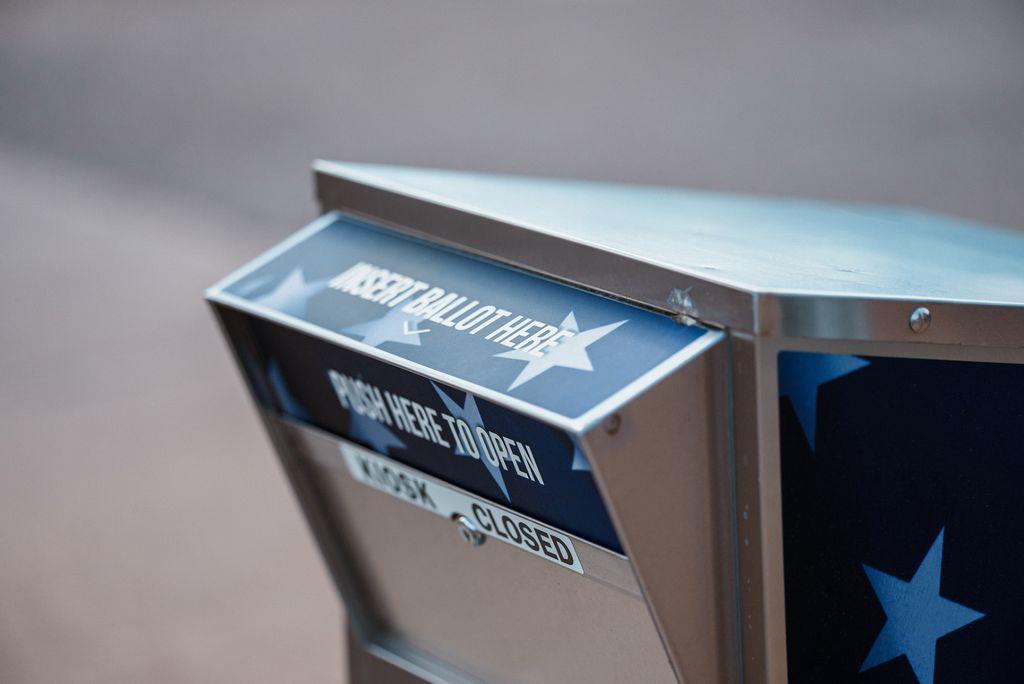
This proposal would replace political party primaries for state elections with a single, all-party primary, open to candidates and voters regardless of their party affiliation. The top two finishers would proceed to the general election in November.
Supporters of a yes vote to enact the all-party primary include Harvard political scientist and former gubernatorial candidate Danielle Allen, spokesperson for the Coalition for Healthy Democracy. She says that party insiders exert too much control over party primaries—for example, by requiring candidates to be approved by state party conventions to make the primary ballot—and that two-thirds of state legislators run unopposed. Supporters of a no vote, including the advocacy group Voter Rights MA, say that the question’s supporters include private equity executives hoping that a single primary will enhance the influence of their donations, and that a single primary likely would knock third parties off of the November ballot, limiting voters’ choices.
Question 4: Election Day Registration
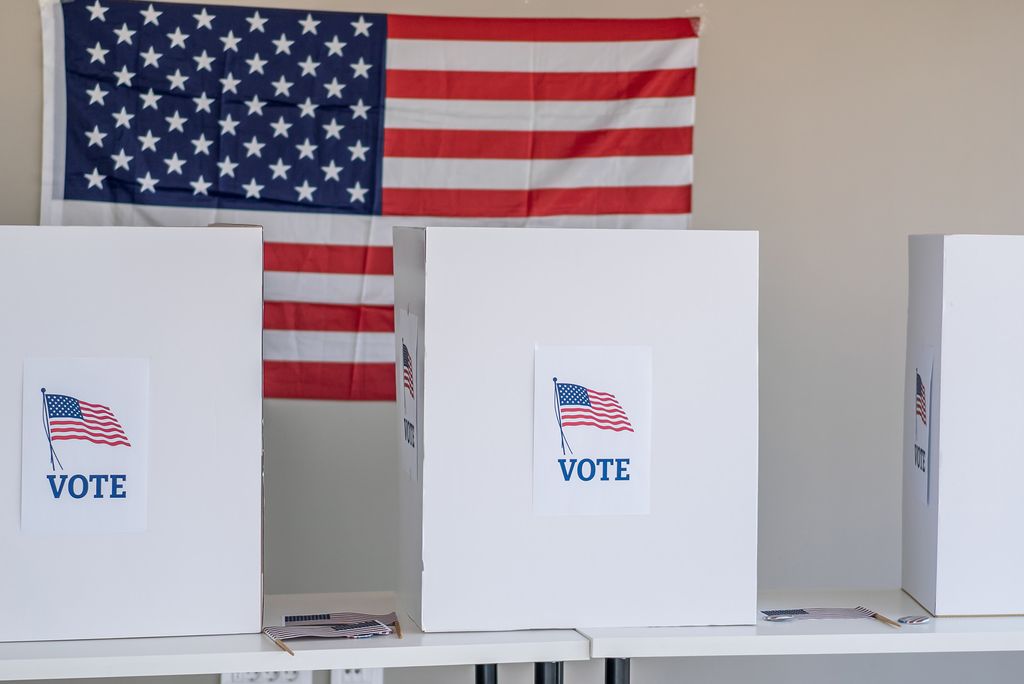
This proposal would permit voter registration—or updating of it—on Election Day. Registrants would go to their polling place and present proof of residency (valid photo identification or such documentation as a current student fee statement or other post-secondary document, a utility bill, bank statement, government check, apartment lease, paycheck, or wireless phone statement). Registrants would sign an oath attesting to their eligibility to vote.
Supporters of a yes vote to enact same-day registration say it would open voting to thousands of unregistered people, especially young people and renters who move often. By requiring proof of residence and an oath, with severe felony penalties for falsely signing it, supporters argue, the proposal would deter voting fraud. Supporters of a no vote, including Amy Carnevale, chair of the Massachusetts Republican Party, say the proposal would compromise efforts to prevent fraud by stripping away the advance period election officials now have to check a registrant’s identity, residence, and eligibility to vote.
Question 5: State Revenue Limit and Rebate

This proposal would alter the formula governing how much annual revenue the state can collect, requiring taxpayer refunds if the amount exceeded the allowed limit. Taking effect on July 1, 2027, the new formula would put stricter limits on allowed budget growth—including aid for schools, municipalities, and the state’s “rainy day” fund for emergencies—and could make taxpayer refunds more frequent.
Supporters of a yes vote to change the formula include the advocacy group Taxpayers for an Affordable Massachusetts, which argues that it would preserve services while keeping spending growth in line with what taxpayers can afford. Given the state’s affordability crisis, taxpayers deserve refunds of “excess revenue,” the group says. Supporters of a no vote, including several labor unions, say the proposal would indeed necessitate budget cuts, forcing municipalities to raise property taxes or lay off essential workers such as teachers and firefighters.
Question 6: Establishing a Nature for All Fund

This proposal would create a “Nature for All” fund earmarked for land conservation and recreation. The proposed fund would direct a small portion of sales tax toward protecting or restoring open spaces, land, and water. The state aims to protect 30 percent of its land and waters by 2030 and 40 percent by 2050, to mitigate habitat loss and threats to biodiversity.
Supporters of a yes vote to establish the fund include the Mass Audubon, which argues that the fund would protect clean drinking water and strengthen communities against climate change, along with other benefits, without burdening the average taxpayer.
There is no organized opposition. However, the Center for State Policy Analysis at Tufts University, which analyzed the question without taking a stand, says this ballot question would not compel lawmakers to increase spending on conservation or recreation. Its executive director, Evan Horowitz, described Question 6 as “either pointless or dangerous.” The legislature could technically ignore the earmark, he wrote. He also said other state-level problems require the funding more urgently, including Medicaid and food assistance, which have recently seen federal budget cuts.
Question 7: Changing State Law to Build More Single-Family Homes, on Smaller Lots
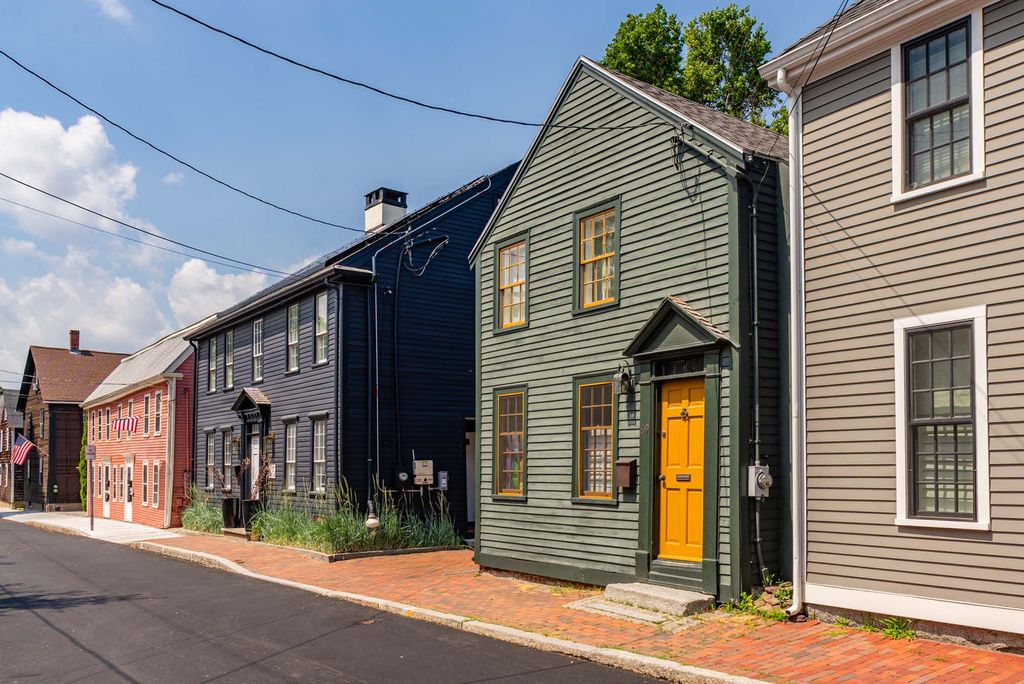
This proposal would allow single-family homes to be built on lots that are at least 5,000 square feet (roughly the size of an NBA basketball court, Boston University’s public radio station, WBUR, calculated). The proposed law would allow towns to “reasonably regulate” aspects of single-family homes, including height, distance from other buildings, open space, and the potential for short-term rentals (e.g. Airbnb possibilities).
Supporters of a yes vote to change the state zoning law include the organization Legalize Starter Homes, Governor Maura Healey, the mayors of Boston, Cambridge, Lynn, and other cities and towns, and the Builders and Remodelers Association of Greater Boston. “Too many young people, working families, and seniors are being priced out of the housing market in Massachusetts,” Legalize Starter Homes’ chair Andrew Mikula wrote in a statement.
Supporters of a no vote—meaning no change to the law for building single-family homes—include the Massachusetts Municipal Association, which says there shouldn’t be a blanket law for all cities and towns in the state, given their different sizes and needs. It doesn’t account for “existing neighborhoods, infrastructure, or environmental conditions.”
Question 8: Rolling Back Recreational Marijuana Legalization

The proposed law would ask voters to reverse Massachusetts’ 2016 legalization of cannabis. Medical marijuana would still be legal, as would possession in small amounts. But the state’s legal cannabis industry—which had $1.65 billion in sales in 2025 and brought in $289 million in state sales taxes—would be shuttered, along with many retail stores and the tax revenue it generates.
Supporting the yes vote to roll back the legalization is the ballot initiative group Coalition for a Healthy Massachusetts, which is funded by the Virginia-based initiative Smart Approaches to Marijuana Action Inc. Smart Approaches’ founder Kevin Sabet recently spoke to WBUR and compared the cannabis industry to the Big Tobacco “mess” and said that the industry is profiting from addiction. A no vote keeps the law as is; the Committee to Protect Cannabis Regulation says voting no protects state and local funding for schools, transportation, and healthcare, as well as 20,000 jobs across the state and cannabis safety and consumer protections.
No US state has ever repealed recreational marijuana legalization.
Question 9: Upholding Firearm Regulations

The proposed law would keep Massachusetts’ existing 2024 gun safety laws in place. Among other things, this law regulates untraceable “ghost guns” (often homemade guns built with 3D printers or kits), raises the minimum age for buying semiautomatic rifles, expands the definition of a “machine gun,” and creates a public dashboard for state firearms data. Everytown for Gun Safety ranks the Bay State #3 in the country in terms of strong gun safety laws, crediting it with the lowest rate of gun deaths.
Supporters of a yes vote back the measure to uphold the gun safety laws. They are led by Vote Yes for a Safe Massachusetts, backed by many groups, including the Massachusetts Teachers Association. Gun rights proponents are pushing for a no vote, arguing the law infringes on legal gun owners’ constitutional rights. The Civil Rights Coalition describes the existing 2024 laws as a “deeply flawed, 116-page piece of bureaucratic overreach that wastes valuable tax dollars and burdens local communities.”
The Midterms on Campus
BU students registered to vote in Massachusetts Ward 5, Precinct 10, can cast their ballots on November 3 in Kilachand Hall’s common room.
Several events are taking place on campus this week, some encouraging civil discourse and others building camaraderie as students watch the returns from the midterm elections. Here’s a list of events:
Democracy is the Mission
Cady Coleman, a retired NASA astronaut and US Air Force colonel, will be the featured speaker in the latest Living Our Values Initiative’s Distinguished Speaker series. Coleman will talk about the importance of civic engagement and her experiences in space.
Wednesday, October 28, 4 pm, Howard Thurman Center for Common Ground, 808 Comm Ave.
Student Government Elections Watch Party
Student Government’s city affairs department will have a live news stream of polling and coverage across the country. There will be free Chick-fil-A, stickers, and a bingo game where students can mark off cards as votes roll in.
Tuesday, November 3, 7 to 10 pm, BU Central (basement of GSU), 775 Comm Ave.
BUTV Election Show
Student television station BUTV will air a live election show from Studio West in the College of Communication on election night. Guests include John Harris, cofounder of Politico, Kelly Garrity, Boston Globe political reporter, and Elias Miller (COM’21, CAS’21), a producer on Meet the Press.
Tuesday, November 3, 6 pm. Watch live on BUTV’s website.