News
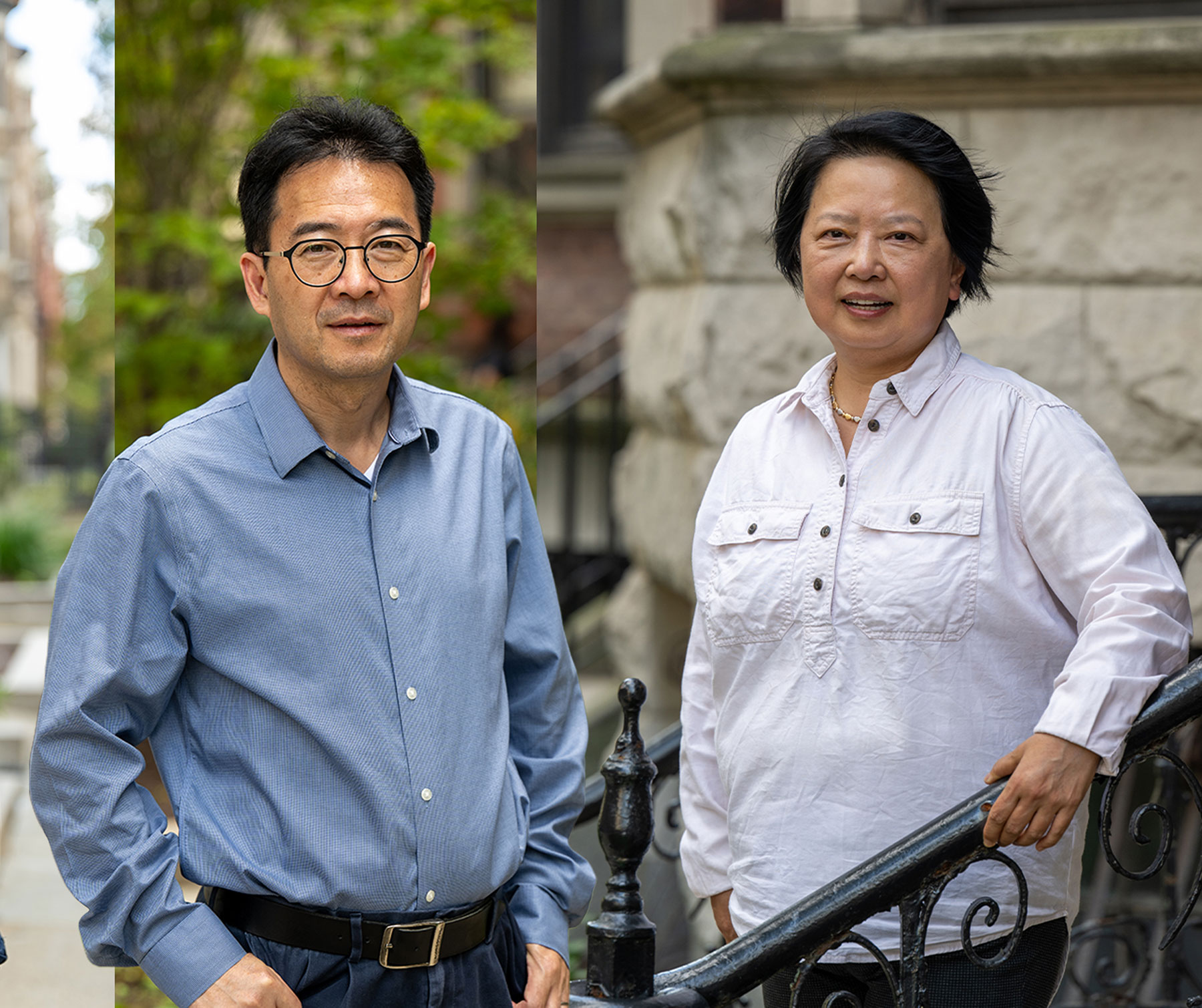
MSE faculty Xin Zhang and Ji-Xin Cheng Named William Fairfield Warren Professors
On September 23, Boston University President Melissa Gilliam and Provost Colin Duckett announced five new William Fairfield Warren professorships, three of whom are ENG faculty: David Boas, Ji-Xin Cheng, and Xin Zhang. More

At 2026 Catalyst Summit, A Focus on Everyday Health
"Our bodies are not working in snapshots. They are generating information continuously, and transmitting that information in signals. What has changed is our growing ability to detect those signals continuously." More

Major State Grant Advances BU Imaging Facilities
$1.58 million from the Massachusetts Life Sciences Center will allow BU to add two high-speed, high-resolution microscopes to the Photonics Center, and more. More

Ignition Awards for Research That Might Reduce Knee Pain, Propel Underwater Robots, and More
The innovative projects earned funding and support on their way to making the leap from the lab to the real world. More

Improving access to life-saving health care
Led by Associate Professor Sheila Russo (ME, MSE) and Associate Professor Tommaso Ranzani (ME, MSE), BU's role is to develop a smarter catheter—a thin tube that combines multiple functions into one tool, a kind of Swiss Army knife for stroke treatment. More
College of Engineering and BU School of Medicine Lead NIH Grant
By bringing together expertise in biomedical engineering, lung physiology, immunology, and infectious diseases, the grant will strengthen collaboration between the College of Engineering and the Aram V. Chobanian & Edward Avedisian School of Medicine. More

Toward Materials That Know How to Handle Noise
Abigail Plummer earned an NSF CAREER award to develop an advanced tool kit that might someday be used to build the next generation of intelligent materials. More

For Novel Nanomedicine, the Goal is Control of Chemical Cues
“This is a powerful idea, because if we can program the locations and gradients of these chemical cues, we can make immune cells move in precise, programmed ways," says NSF CAREER award winner Michelle Teplensky. More

Using AI to Help Medicines Get Where They Need to Go
How does medicine know where to go once you take it? Generally, that information is encoded directly in the medicine, and sometimes it’s relatively easy, More

NSF Awards ENG $20 Million to Help Create National “Cloud Lab” Network
The National Science Foundation (NSF) has awarded the College of Engineering $20 million to help create a national network of cloud labs, artificial intelligence-infused research facilities that can remotely run science and engineering studies. The network will allow researchers from anywhere in the country to request complex experiments and tests that they don’t have the equipment or expertise to do themselves. More
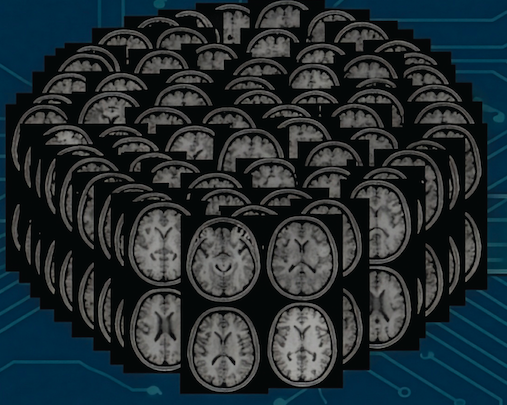
Can We Train AI to Read an MRI?
The BU team's smarter AI system for evaluating brain scan images might someday help clinicians spot diseases sooner, saving lives while cutting costs. More

Critical Mass
Together, the College of Engineering and the Commonwealth of Massachusetts are tackling societal problems, exemplifying how universities can contribute to the regions they call home. More
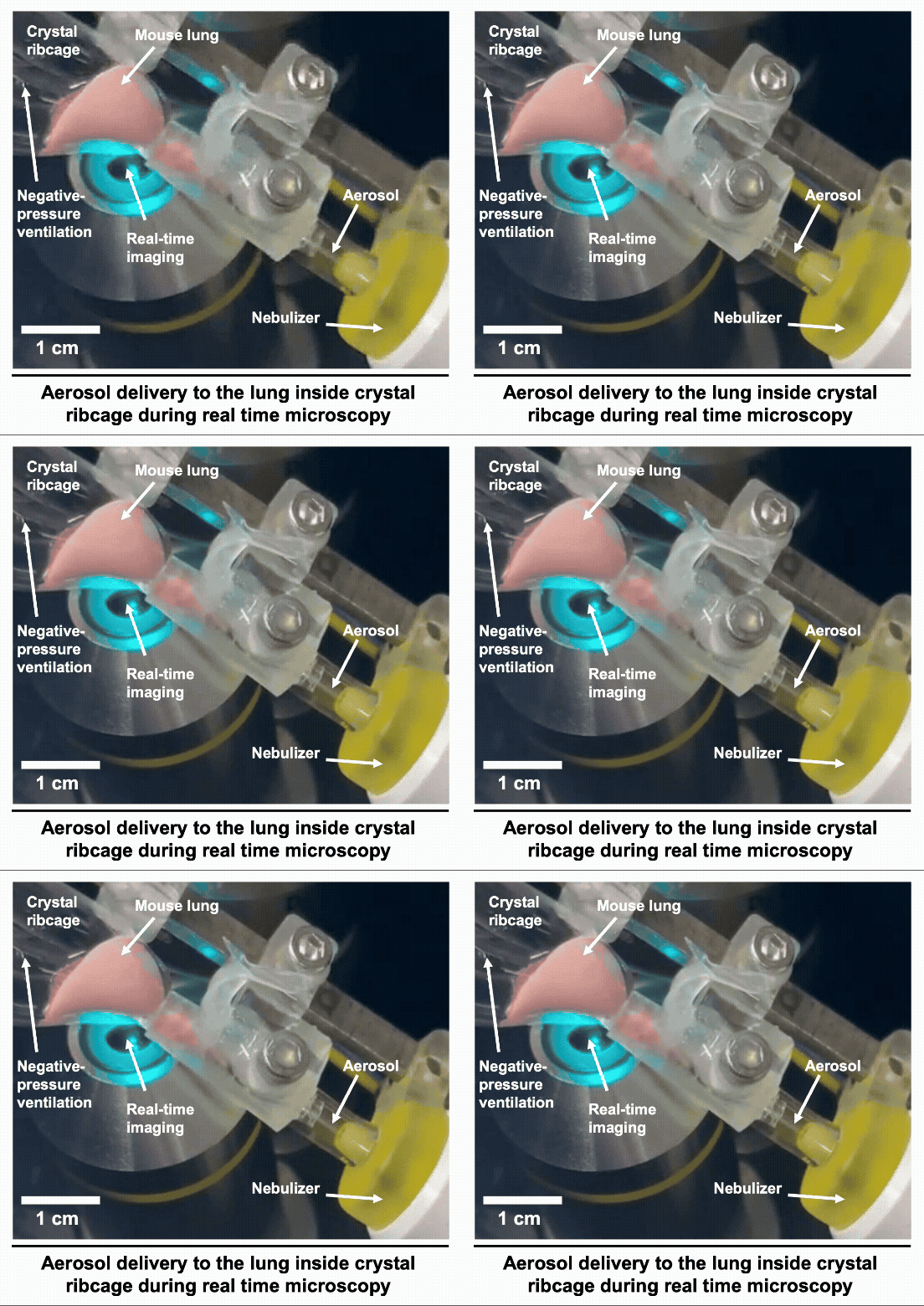
Tracking Airborne Particles on Their Journey Through Your Lungs
In a paper published in Nature Biomedical Engineering, “Real time single particle imaging of functional lungs reveals mosaic-like patterns of aerosol deposition in alveoli,” Gabrielle Grifno, a doctoral student in Nia Lab, used the Crystal Ribcage to identify previously unrecognized details in the lung at the level of individual alveoli (air sacs). “The crystal ribcage technology was essential to this discovery, as it enabled single-particle imaging of the intact, functioning lung in real-time at a scale not previously possible,” said Nia. More

Distinguished Fellows Launch Sustainability Summer Projects
This summer, students are working on technologies that might lead to stronger and longer-lasting lithium-ion batteries, more affordable water purification and desalination systems, and more energy-efficient computer chips. More

Xin Zhang Makes “World Changing Ideas” List for Second Straight Year
Zhang's technology, which the magazine named a 2026 "World-Changing Idea," could make air conditioners, airplanes, and data centers quieter. More

ENG faculty awarded research funding from Hariri Institute
ENG faculty are well-represented in the latest round of the Hariri Institute's Focused Research Programs, which provide seed funding for convergent research efforts in multi-disciplinary teams to coalesce in sustainable ways. The mission is to evolve and advance discoveries and innovations in computing and AI, with the goal of accelerating research that leads to future funding and broad impact. More
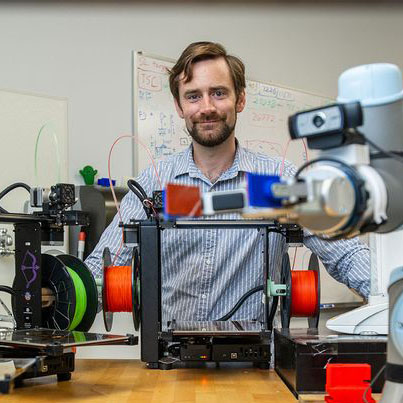
Keith Brown to Lead Materials Science & Engineering Division
A New Chapter for MSE Boston University College of Engineering has appointed Keith Brown, associate professor of mechanical engineering, materials science and engineering, and physics, as... More
ENG Researcher Helps Launch New Clean Energy Tools
Associate Professor Emily Ryan (ME, MSE) is part of a convergent research across Boston University. Ryan collaborated with BU faculty to design tools meant to... More

A Steel Ring and a Solemn Oath
After stirring and thought-provoking words from Irving Bigio about their coming responsibilities, nearly 350 graduating seniors recited the Obligation of the Order of the Engineer. More

Evidence-Based Hope
In a pair of ceremonies leading up to BU Commencement, the College of Engineering celebrated the Class of 2026. More

Look Out Below!…
Researchers demonstrated the remarkable shock absorbency of the pomelo fruit, by dropping it from a BU rooftop. What they learn might lead to better protective coverings for ship's hulls, sensitive equipment packaging, and even your cell phone case. More

Hartwell Award Honors Miguel Jimenez for Advancing Next-Generation Microbial Medicine
Boston University researcher Miguel Jimenez is developing “microbial devices” that use living microorganisms to detect disease and deliver targeted therapies for conditions like pediatric inflammatory bowel disease. His award-winning research could help create more personalized, non-invasive healthcare technologies for the future. More

A Retinal Prosthesis Might Restore Sight for Millions with Age-Related Macular Degeneration
The technology offers hope to people with an incurable disease that’s one of the leading causes of blindness. More

A History of Innovation at Boston University
In the 150 years since a BU professor invented the telephone, plenty of other BU-bred inventions have made profound and lasting impacts across society. More

Innovation Spotlight: Theodore Moustakas and Modern Display Technology
BU Today recently highlighted the university's long-standing legacy of innovation in the article “A History of Invention and Innovation”. The piece celebrates transformative discoveries by... More
WHO and Zaman Join Forces to Help Populations at Risk from Antimicrobial Resistance
Refugees and asylum seekers face a heightened risk of deadly infection. The World Health Organization is working with Muhammad Zaman and the BU Center on Forced Displacement to address the problem. More

Cheng Named NAI Fellow
With more than 30 patents to his name, precision medicine pioneer Ji-Xin Cheng has been named to this year's class of fellows of the National Academy of Inventors. More
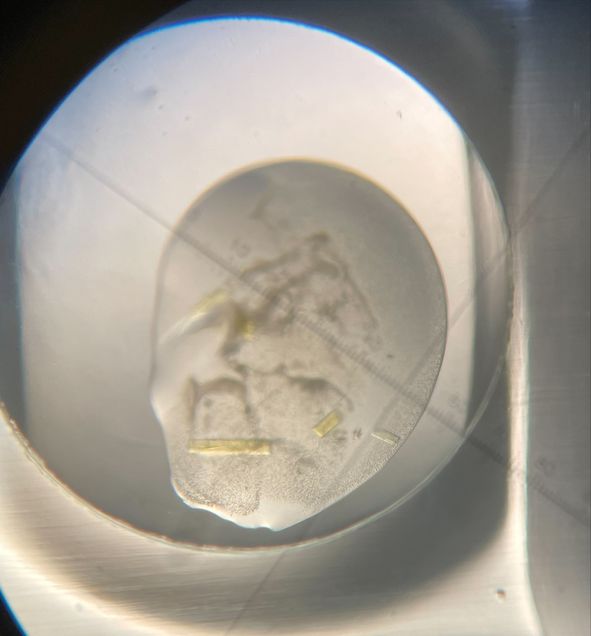
Engineering Enzymes to Develop Hormone Biosensors
PhD student Takumi Hawes aims to modify enzymes, so they effectively bind to the hormone cortisol. This may revolutionize biomedical devices that track hormone levels. More

The Uses of Invention
Professor Ji-Xin Cheng Elected NAI Fellow. More

Undergraduate Researcher Helps Decode Solar Energy Capture
Undergraduate student Jacob Lydon’s research may reveal how photosynthetic pigment, chlorophyll a, achieves highly efficient solar energy harvesting. More
A New Path to Restoring Vision: Chen Yang’s Lab Develops Flexible Retinal Prosthesis
Chen Yang has led research that can revolutionize the quality of life for blind patients through high precision retina stimulation. More

10 Ways BU Researchers Could Revolutionize Cancer Care
These innovative, potentially lifesaving projects could transform cancer prevention, treatment, and care. More
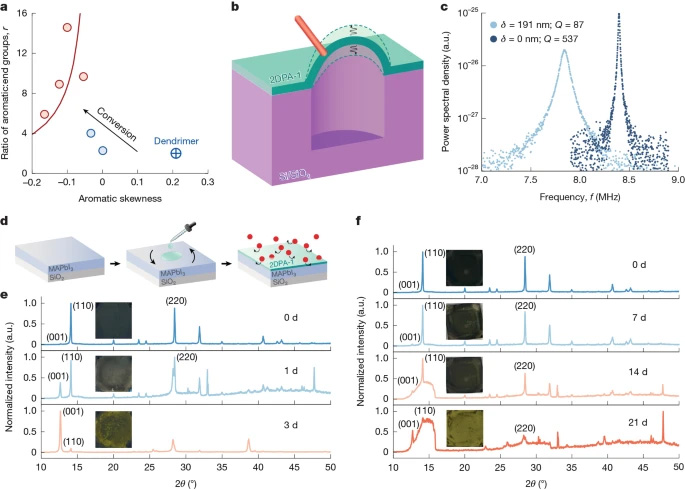
A Polymer That Defies Nature: The First Molecularly Impermeable Plastic
For decades, scientists believed all plastics shared one unavoidable weakness: no matter how dense or strong, gases could always slip through. Even the toughest polymers, from bulletproof Kevlar to everyday food packaging, may look solid, but at the molecular level, tiny gas molecules can still sneak through. That’s why potato chips go stale and packaged food loses its crispness. Now, a collaboration between researchers at Boston University’s College of Engineering, MIT, the University of Texas at Austin, the University of Massachusetts and the National Institute of Standards and Technology, has overturned that assumption. In a study published today in Nature, the team reports the discovery of the first polymer that is molecularly impermeable; a man-made material that acts as a perfect barrier to gas molecules. More
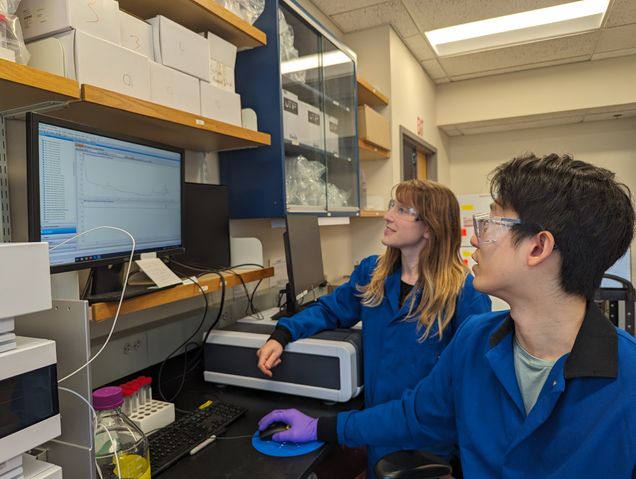
Nanomaterials and Vaccine Research Earns CMBE Rising Star Award
Michelle Teplensky was awarded the Biomedical Engineering Society’s 2026 Cellular and Molecular Bioengineering Rising Star Award. More
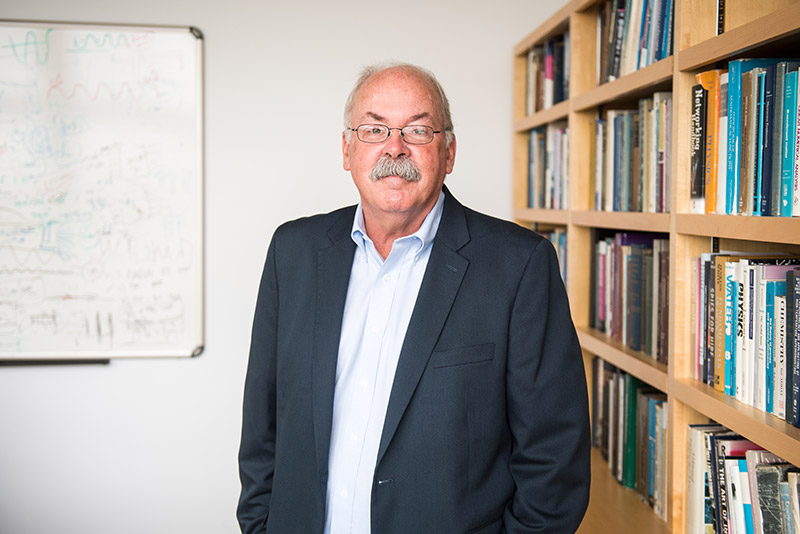
David Bishop wins prestigious prize for his contributions to understanding superfluids
David Bishop was awarded the 2026 Oliver E. Buckley Condensed Matter Physics Prize on November 5, 2025, for groundbreaking experiments that uncovered the role of vortices in the superfluid phase transition in helium films and observed anyonic braiding statistics of quasiparticles in the fractional quantum Hall effect, thus establishing the significance of topological excitations in two-dimensions. More

Self-Driving Lab to Accelerate the Breakdown of Toxic Chemicals
A new federally funded research effort is tackling one of chemistry’s most complex challenges, safely breaking down toxic industrial chemicals. Keith Brown (ME, MSE, Physics)(PI)... More
Accelerating Progress with Self-Driving Labs
Materials researchers shared successes and challenges with automation. More
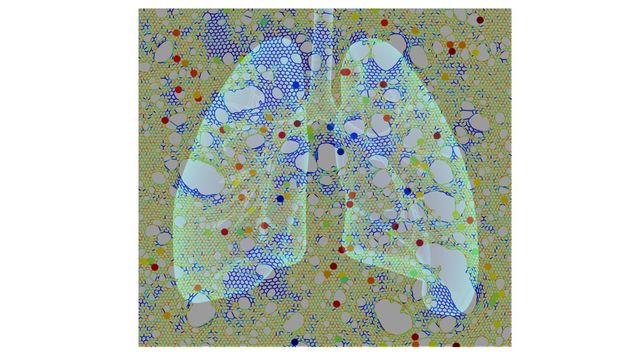
Building Virtual Laboratories for the Lung
Suki has co-authored what promises to be a foundational text on modeling for pulmonary researchers. More
Emily Ryan named Duan Family Faculty Fellow
Emily Ryan, (ME, MSE), has been named a Duan Family Faculty Fellow by BU's Faculty of Computing and Data Sciences. More
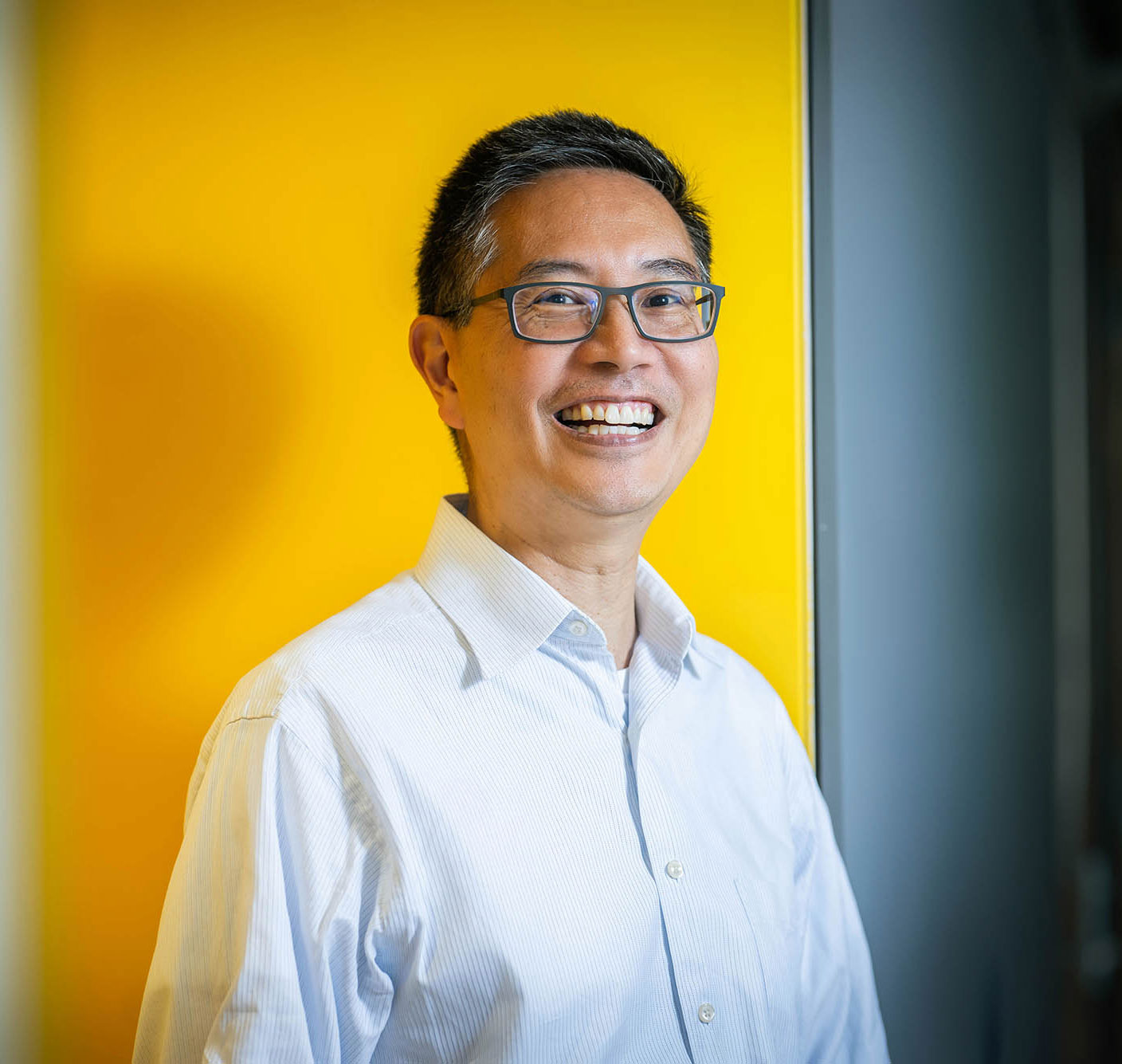
Biomedical Engineer Christopher Chen Elected to National Academy of Medicine
Christopher Chen, the William F. Warren Distinguished Professor of BME and MSE has been elected to the National Academy of Medicine. More

Xin Zhang, James Galagan Recognized for World-Changing Ideas
The engineering professors' inventions made the 2025 Fast Company list. More

A Glimpse at Tomorrow’s Energy Technologies
This year's Catalyst Summit showcased groundbreaking research and fresh ideas in energy, AI, and sustainability technology. More

BU Receives Major Multimillion Dollar NIH Grant for Women’s Health Research
The grant will also spur investment in early-career faculty. More

This Smarter Sound Shield Blocks More Noise—Without Blocking Air
The breakthrough was made possible through the use of phase-gradient metamaterials. More

Brown to Bring Expertise to AI Materials Institute
Brown is one of the pioneers in the movement toward targeted design of new materials. More

The Appeal of a Peel
McDaniel seeks to replicate the pomelo fruit’s energy absorption mechanisms, on a larger scale. More
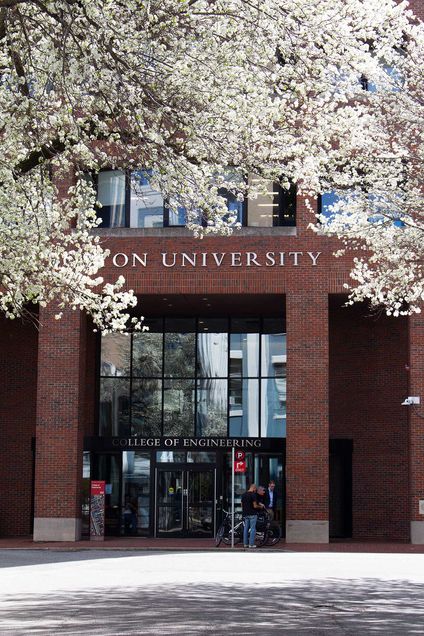
Promotions for ENG Faculty
"They exemplify each day the depth and excellence of Boston University’s talented academic community.” More

ASM Materials Experience 2025 with BU MSE
Boston University hosted the 2024 ASM Materials Experience, a hands-on event introducing high school students to the exciting world of materials science and engineering. More

Thomas A. Edison Patent Award for Xin Zhang
Zhang is being recognized for her pioneering contributions to the field of metamaterials. More
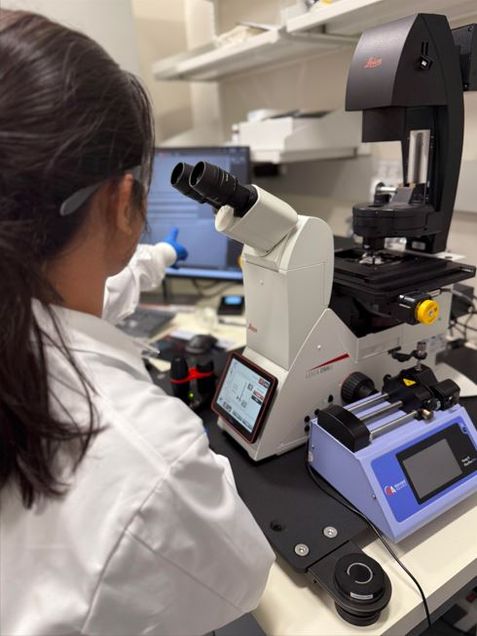
Rainin Funds for Researchers Developing Smart Probiotics
Professors Miguel Jimenez and Liang Hao are taking a new approach to IBD by building and testing genetic tools directly in animal models of intestinal inflammation. More